A mug left in the sink. A driver who doesn't indicate. A child who asks the same question for the third time. Someone who talks over you in a meeting.
None of it matters much. You know that. And yet the reaction arrives anyway, hot and fast, out of all proportion to what actually happened. Your voice is raised before you have decided to raise it. Ten minutes later you are calm again, wondering why on earth you reacted like that, and usually feeling worse about the reaction than you ever did about the mug.
If that sounds familiar, you are not a bad-tempered person and you are not unusual. It is one of the most common things people describe to me when they first get in touch about anger. And there is a clear reason it happens.
When anger is out of proportion to the trigger, the trigger is not the cause. It is the last straw.
Anger is a protective response. Its job is to get you ready to deal with a threat, and it does that very quickly, long before the thinking part of your mind has weighed anything up. Heart rate up, jaw tight, shoulders set, words ready. That speed is useful when something genuinely needs dealing with. It is a problem when the system has been primed so often that it starts treating minor irritations as threats.
So the mug in the sink is not really being judged as a mug. It is being read as one more sign that nobody listens, that everything falls to you, that you are not respected. The reaction fits that meaning, not the mug. That is why it feels so justified in the moment and so out of place ten minutes later.

The simplest way I can describe it is a cup that is already nearly full. When the cup is half empty, a small thing goes in and nothing happens. When it is full to the brim, the same small thing makes it spill. The last drop gets the blame, but it was everything already in the cup that did it.
What fills the cup varies from person to person, but the same few things come up again and again:
None of these are excuses. They are explanations, and the difference matters, because an explanation tells you where the work needs to happen.
Most people who contact me have already tried the standard advice. Count to ten. Walk away. Breathe. Think before you speak.
The advice is not wrong, and some of it helps a little. The trouble is timing. Every one of those techniques relies on you noticing the anger early enough to use them, and the whole problem is that the reaction fires faster than you can notice it. By the time you remember to count, you are already at seven and the words are already out.
Willpower runs into the same wall. You can promise yourself on Sunday evening that this week will be different, and mean it completely, and still snap on Tuesday morning when the toast burns. That is not a failure of character. It is a decision made in the thinking part of the mind trying to overrule a reaction that lives somewhere quicker.
There is also a cost to holding it in. Gritting your teeth through it often just moves the anger somewhere else, into tension, headaches, poor sleep, or a bigger outburst later at someone who had nothing to do with it.
If the problem is a reaction that fires too fast, the answer is not to get better at chasing it. It is to change the reaction itself, and to empty the cup so there is room again.
That is the part of the work hypnotherapy is suited to. In a calm, focused state, we work directly with the automatic response rather than arguing with it, and with whatever has been keeping the cup full: the stress, the old resentment, the learned habit of reaching for anger first. We also rehearse the situations that usually set you off, so the calm response gets practised in exactly the places it has been missing.
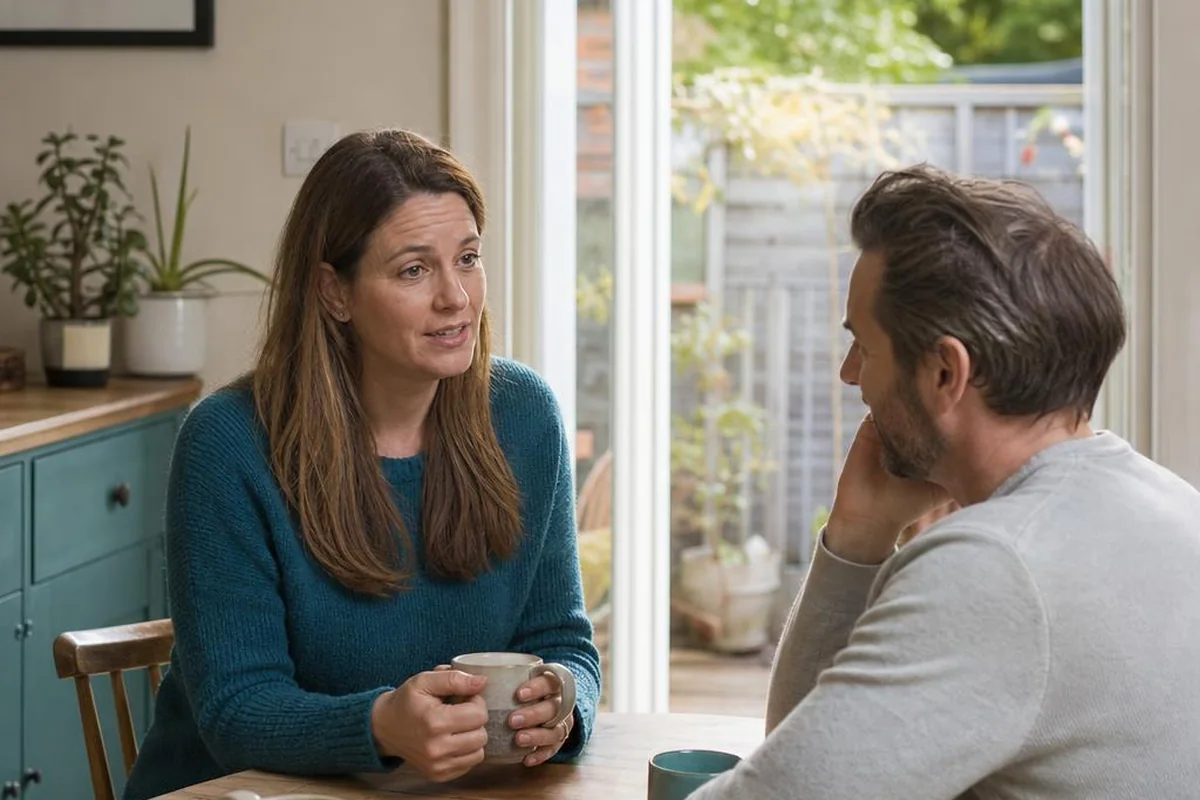
What people notice first is usually not a feeling but a gap. A moment between the trigger and the reaction that was not there before. The mug is still in the sink, the driver still doesn't indicate, and you register it, and that is all. In that gap you get to choose what you do next.
You can read how I work with this, what a session involves and what it costs on my anger management page.
Getting angry over small things is not a fixed part of who you are. It is a pattern, and patterns can change, usually far more quickly than people expect once the work is aimed at the right place.
I work with anger in person at my practice at Markham House in Wokingham, and online via Google Meet across the UK. If you would like to talk it through first, the phone call is free and there is no obligation. Or you can go straight to the anger management page and book your consultation there.