Before you can change anxiety, it helps enormously to understand it — because half of anxiety's power comes from how frightening and mysterious it feels.
So here it is, explained plainly: what's actually happening in your body and mind, why it happens to capable, sensible people, and why none of it means you're broken.
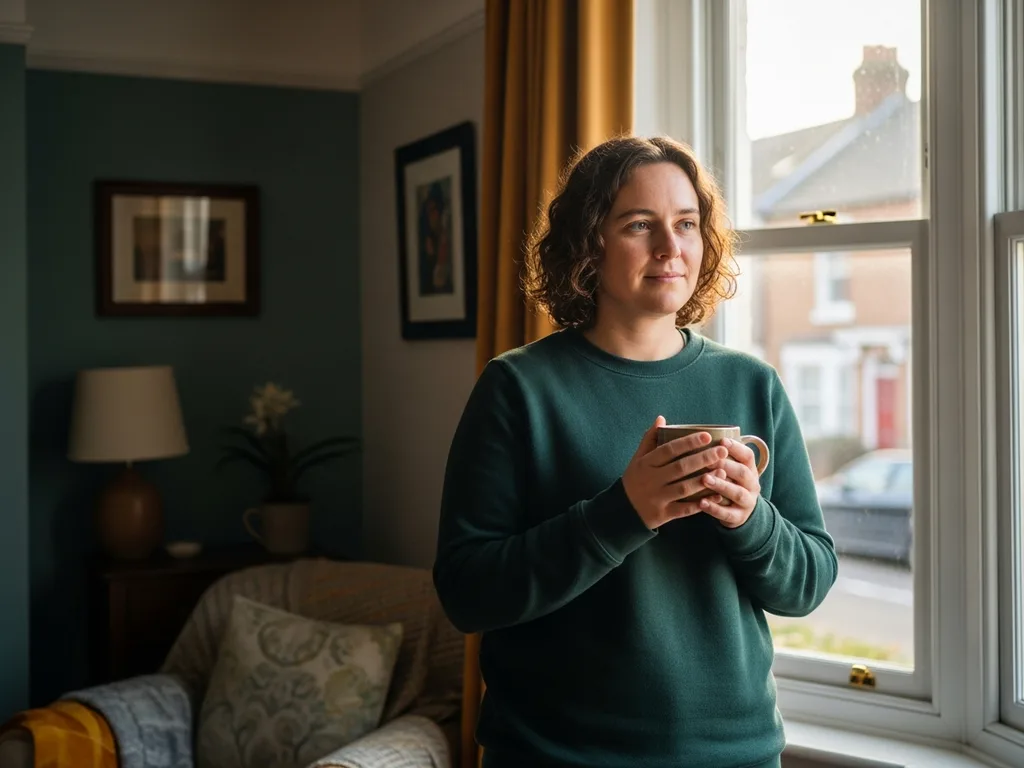
Anxiety is your body's threat-protection system firing when it doesn't need to.
Every human has an inbuilt alarm — the fight-or-flight response — designed to keep you alive. When your brain detects danger, it floods your system with adrenaline and cortisol: heart rate up, breathing faster, muscles tensed, digestion paused, senses sharpened. Facing a genuine threat, this is magnificent. The problem is that the alarm can't tell the difference between a charging animal and a difficult email, a crowded train, or a 3am thought about next week. Same alarm, same chemicals, same physical symptoms — tight chest, racing heart, churning stomach — with nothing to fight and nowhere to run.
Anxiety, in other words, isn't weakness. It's a protection system that has learned to over-protect.
Anxiety patterns are learned — usually without your knowledge or consent. Common routes in: growing up around worry or unpredictability, so vigilance became normal; a difficult period — loss, illness, pressure, a bad experience — that taught your alarm to stay switched on; years of stress that gradually lowered the trigger threshold; or a single frightening event (a panic attack, an embarrassment, a health scare) that your mind now guards against constantly.
Notice what all of those have in common: none is a character flaw. Your mind did what minds do — it learned. Which is also the good news, because what was learned can be retrained.
The alarm fires from the subconscious — faster than conscious thought. That's why you can know the worry is irrational and still feel your body react; the feeling has already happened before logic arrives. It's also why "just calm down," positive thinking, and sheer willpower so often fail: they're aimed at the thinking mind, and the pattern doesn't live there.
This is precisely why approaches that work at the automatic, subconscious level — like clinical hypnotherapy — can succeed where trying harder couldn't. If you're curious how that works in practice, my plain-English guide to what clinical hypnotherapy actually is explains it, and I've reviewed the published evidence honestly in does hypnotherapy work for anxiety?
Anxiety is one system with many disguises. It can look like panic attacks — sudden surges that feel physical and terrifying. Like constant worry or overthinking — a mind that never switches off. Like social anxiety — the fear of judgement. Like health anxiety — a mind that scans the body for danger. Like generalised anxiety — background dread with no single cause. Or like avoidance: the motorways not driven, the invitations declined, the life quietly shrunk to fit the fear.
Different faces; same over-protective alarm underneath. That's why treating the root pattern matters more than managing each symptom separately.
Anxiety is not who you are. It's something your mind learned to do — brilliantly, relentlessly, and for reasons that once made sense. And because it was learned, it can be unlearned. I've watched more than 3,790 clients discover that, many of whom arrived certain they were the exception.
If you'd like to explore what that could look like for you, start with my main anxiety hypnotherapy page — or simply book the free phone consultation and tell me what your version of anxiety looks like. No pressure, no obligation; just an honest conversation.

Ready to understand what your version of anxiety looks like?
Book a Free Phone ConsultationSpecialised Anxiety Support
Every concern is different. Choose where yours shows up most — each has its own tailored hypnotherapy approach with Darren Carter.

Where to begin
Explore
Quiet the racing mind
Explore
Calm the surge
Explore
Break the worry loop
Explore
Ease in company
Explore
Ease relationship worry
Explore
Quiet health worries
Explore
Confidence behind the wheel
Explore
GAD & constant unease
Explore
Support, UK-wide
ExploreWritten by Darren Carter — anxiety specialist hypnotherapist.
All sessions confidential. In person in Wokingham or online UK-wide.