
Vaping in the UK: The Real Numbers You Need to Know
Introduction: Think Vaping Is Harmless? Think Again
Vaping has exploded in popularity across the UK, especially among teens and young adults. But while e-cigarettes are often marketed as a safer alternative to smoking, the statistics tell a far more serious story.
According to official UK government health data, vaping is contributing to rising nicotine addiction, hospital admissions, and mental health issues — particularly in young users. Many don’t realise how addictive it really is until they try to quit.
Teen Vaping in the UK Has Tripled Since 2018
Recent findings show that regular vape use among 11 to 17-year-olds has tripled since 2018 — jumping from under 5% to nearly 14%.
This is especially concerning as disposable vapes, with their colourful packaging and sweet flavours, are the most popular choice — despite age restrictions.
These insights are backed by Action on Smoking and Health (ASH) UK, which monitors youth vaping trends and calls for stricter regulation.
95% of Vape Products Contain Nicotine
Despite how they’re often marketed, most vape products contain high doses of nicotine. According to NHS smoking cessation guidelines, 95% of e-liquids contain nicotine, even those labelled as “low strength.”
And it’s not just about quantity. Many vapes use nicotine salts, a chemical form that’s absorbed rapidly into the bloodstream — making them more addictive than traditional cigarettes.
Over 300 Vape-Related Hospital Admissions in a Year
According to NHS Digital, there were over 300 hospital admissions in England between April 2022 and October 2024 linked to vaping-related disorders. These cases included instances where vaping was recorded as either the primary or secondary diagnosis. That’s more than 300 individuals experiencing serious health impacts from e-cigarette use.
Reported symptoms include:
Chest tightness
Shortness of breath
Persistent coughing
This clearly shows that while vaping may contain fewer chemicals than smoking, it’s far from harmless — especially when used frequently or long-term.
Vaping Is Linked to Anxiety and Mood Instability
Many people turn to vaping to manage stress or anxiety — but research suggests this may actually be worsening the problem.
A peer-reviewed study published in Addictive Behaviors found that daily vape users were significantly more likely to report anxiety, depression, and mood disruption.
Why? Because nicotine:
Disrupts dopamine and serotonin balance
Affects sleep cycles
Elevates baseline anxiety over time
Vaping Often Leads to Smoking

Despite earlier beliefs that vaping helps prevent smoking, recent studies suggest the opposite—especially among young users.
A UK-based meta-analysis reports that adolescents who vape are up to 6 times more likely to start smoking traditional cigarettes than those who avoid vapes . This “gateway effect” is a major public health concern, as many teens transition from vaping to long-term smoking.
How Hypnotherapy Helps with Ketamine Recovery
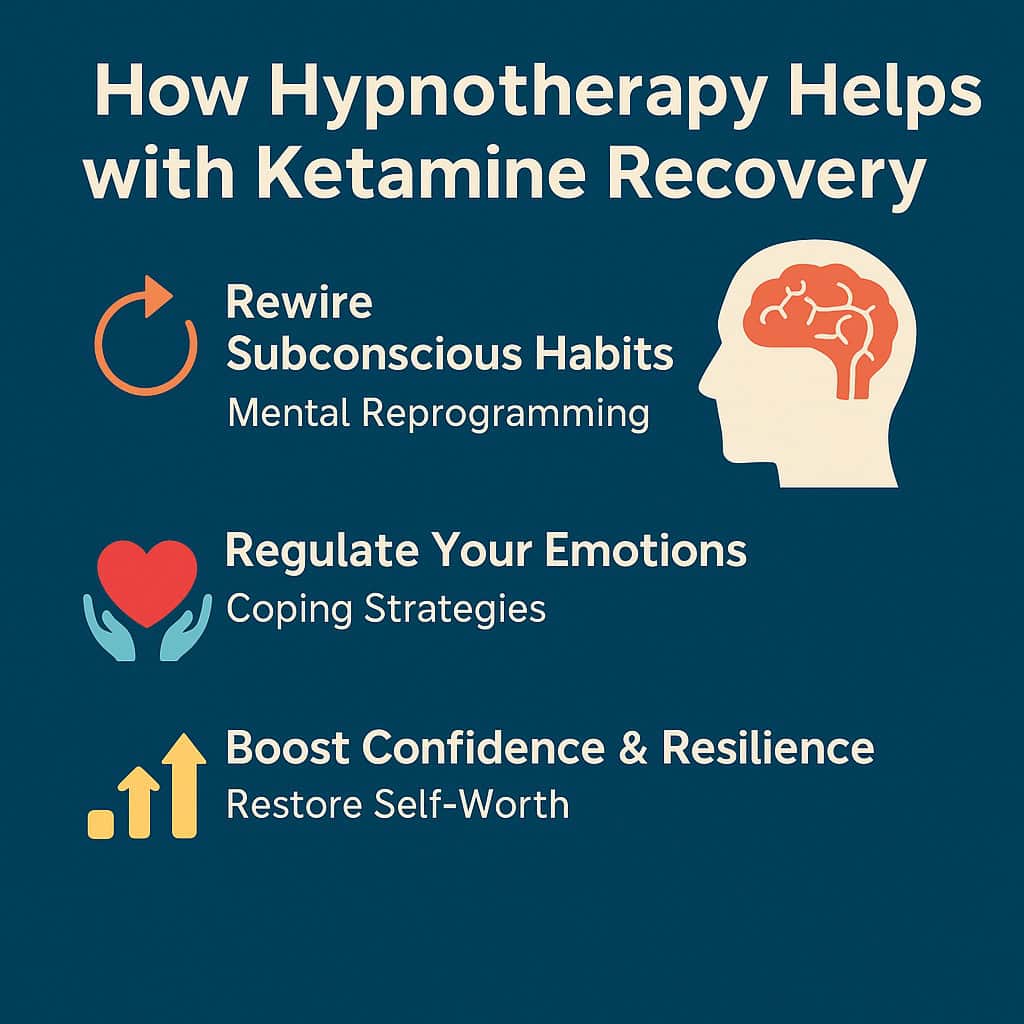
Hypnotherapy offers a safe, non-judgemental space to explore why ketamine use started — and what emotional needs it may be masking. Through deep relaxation and subconscious reprogramming, hypnotherapy can help you:
Break the psychological habit loop
Strengthen emotional regulation and coping skills
Reframe triggers that lead to dissociation or anxiety
Rebuild confidence and self-worth
Create a structured recovery plan
Darren Carter’s Personalised Recovery Approach
Every client is different. That’s why I tailor your hypnotherapy sessions around you — your triggers, your goals, your story. Whether you’ve used ketamine recreationally or feel trapped in a cycle of emotional reliance, I’ll guide you through evidence-based strategies that work.
📞 Book your free consultation
In-person or online hypnotherapy sessions available
Explore addiction reprogramming and relapse prevention
How I Help Clients Recover from Ketamine Addiction
I often work with high-functioning adults—students, creatives, professionals—who tell me:
“I didn’t realise how much ketamine was affecting me… until I couldn’t stop.”
Ketamine’s psychological grip can be quiet but intense. That’s why I take a calm, neuroscience-informed approach using advanced hypnotherapy techniques designed to:
Retrain the brain’s response to dissociation and escapism
Address underlying stress, trauma, or emotional numbing
Rebuild connection with your body and restore inner clarity
Support bladder-safe recovery and improve physical well-being
Create personalised recorded hypnosis tools to stay on track
Many of my clients experience real breakthroughs within 3–4 sessions.
You Don’t Have to Stay Stuck
Maybe you’ve told yourself it’s “not that bad.”
But if you’ve landed here, something in you is ready for better.
Let’s talk. No shame. No judgment. Just the next step forward.
📞 Book a Free Phone Consultation
📲 Or text/WhatsApp: 07562 745 578
Final Thought: This Is How You Start Healing
You don’t need to have it all figured out.
You just need one win to move forward:
One clear day
One craving managed
One calmer night of sleep
One hypnotherapy session that rewires the loop
You’re not failing—you’re healing. And I’d be honoured to help guide that journey.
Conclusion: Know the Risks, Take Back Control
Ketamine may seem harmless in small doses, but the long-term consequences are real — and often irreversible. Whether you’re concerned about your own use or someone else’s, awareness is the first step. Hypnotherapy provides a supportive and empowering way to break free from ketamine dependency and take back control of your mental clarity and emotional well-being.
Frequently Asked Questions
Can you get addicted to ketamine?
While ketamine isn’t physically addictive in the traditional sense, it can lead to strong psychological dependence.
Is bladder damage from ketamine reversible?
In some cases, reducing or stopping use may improve symptoms — but for many, the damage is permanent.
What is a K-hole?
A dissociative state caused by high doses of ketamine. It often involves intense detachment, hallucinations, and out-of-body sensations.
How does hypnotherapy help with cravings or dissociation?
Hypnotherapy addresses the subconscious patterns fueling use, helping you replace them with calm, grounded responses.