
Fear of Spiders: Why It Happens, and Why It Doesn't Go Away on Its Own
Arachnophobia is the most common phobia in the UK, and one of the most misunderstood. People who have it are told to grow out of it, that spiders are more frightened of them, that it's only a little money spider. None of that helps, and most people with a spider phobia already know every one of those arguments. Knowing them changes nothing, which is precisely the point.
I see a lot of people for this, and the thing that surprises them most is how quickly it shifts once it's worked on properly. It tends to be one of the most responsive things I do.

What a spider phobia actually is
A phobia is not a strong dislike. It's an automatic threat response that fires before you've had a chance to think.
The sequence matters. You see a spider, or think you might have seen one, and your body reacts first. Heart rate climbs, breathing changes, muscles tense, and you're moving away before any conscious decision has been made. The thinking part of you catches up a second or two later, usually to tell you that you're being ridiculous.
That gap is why reasoning doesn't work. The response happens in a part of the brain that doesn't deal in evidence or statistics. You can know perfectly well that a house spider cannot hurt you and still be unable to be in the room with one. That isn't weakness, and it isn't a character flaw. It's a learned anxiety response running faster than thought.
Why spiders in particular
There's an evolutionary argument that humans are primed to notice fast-moving, many-legged things, and there's probably something in it. But it doesn't explain why some people have a spider phobia and others don't, and it certainly doesn't explain why it can start at thirty after decades of being fine.
In practice, most spider phobias come from one of three places.
Sometimes there's a specific moment. A spider in the bed, one that ran up an arm, a bad experience at a particular age. The mind files it as dangerous and never revisits the decision.
Sometimes it's learned from someone else. A parent who screamed at spiders teaches a child that spiders are worth screaming at, long before the child has any view of their own. This is very common, and people are often surprised to trace it back that way.
And sometimes there's no origin story at all. The response was established early, quietly, and nobody remembers how. That's fine. You don't need to know where it came from in order to change it.

Why it gets stronger rather than fading
Most fears settle with time. Phobias generally don't, and the reason is avoidance.
Every time you leave the room, get someone else to deal with it, check the bath before you get in, or scan the ceiling on the way to bed, you get immediate relief. That relief is the problem. Your mind reads it as confirmation that the danger was real and that avoiding it worked, so the response is reinforced rather than weakened.
Over time the avoidance widens. It starts with spiders and spreads to the shed, the loft, the garden in late summer, holidays somewhere warm, a friend's house with a conservatory. The fear hasn't grown. The list of places it applies to has.
There's a second layer that people rarely mention because it sounds odd. Most people with a spider phobia spend a good deal of time scanning for spiders. Corners of ceilings, plugholes, the gap behind the sofa. The checking feels protective, but it keeps your threat system switched on, and it means you find more spiders than someone who isn't looking. So the evidence appears to support the fear, when in fact the looking is producing it.
Why willpower and exposure alone often don't work
People usually arrive having tried both.
Willpower fails for the reason set out above. You cannot out-argue a response that fires before the argument starts.
Exposure is a different matter. Done properly and gradually it does work, and it is the mainstay of a lot of phobia treatment. But done badly it makes things worse, and a great many people have had it done badly. Being handed a tarantula by a well-meaning friend is not exposure therapy. It's a threat, delivered by someone you trusted, and it tends to strengthen the phobia rather than reduce it.
What hypnotherapy does differently
The work happens at the level where the response actually lives, rather than the level where you argue with it.
In practice that means three things.
First, we find what the response is attached to and separate the two. Spiders stop carrying the meaning they picked up, so the automatic reaction has nothing to fire at. This is not a matter of convincing you that spiders are pleasant. You are allowed to continue to find them unappealing. Most people do, and that's a preference rather than a phobia.
Second, we deal with the anticipation, which for many people is worse than any actual spider. The worry about the loft before you go up. The reluctance to go in the shed. That's usually the part costing you the most day to day, and it's very treatable.
Third, we rehearse the situations you've been avoiding, in a controlled way, so your mind updates its own file rather than being told to. That's what makes the change hold rather than lasting a fortnight. You can read more about my approach to hypnotherapy for fear of spiders.

What actually happens in a session
Nothing dramatic, and nothing like stage hypnosis.
You stay fully aware throughout. You can hear everything, you can talk, you can open your eyes, and you can stop whenever you want. It feels much like being absorbed in a film, or those last few minutes before sleep. Relaxed, focused, and entirely ordinary.
There are no spiders in the room. You will not be shown pictures or asked to hold anything. That isn't how I work with phobias, and it isn't necessary.
We start with a consultation to understand what the response is doing, when it fires, what you're currently avoiding, and what you want to be able to do that you can't do now. From there the sessions are built around your situation rather than a generic phobia script. You get a recording after each one to use at home.
How many sessions it takes
Specific phobias like this are usually among the quicker pieces of work. Many people need only a small number of sessions, and it's not unusual for the shift to be noticeable after the first.
I won't put a number on it here, because it depends on how long it's been running, how much of your life has been organised around it, and whether there's anything else sitting alongside it. That's what the consultation establishes, and I'd rather tell you honestly at that point than promise something now.
What recovery actually looks like
Not delight. This is worth saying plainly, because people expect the wrong thing and then think it hasn't worked.
The goal is indifference. You see a spider, you register it, and nothing happens. You deal with it or you don't. You might still prefer it wasn't there. What's gone is the surge, the racing heart, the needing to leave the room, and the hour afterwards knowing it's somewhere in the house.
The better measure is what comes back. The loft. The shed. The garden in September. Sleeping in a room where you spotted one earlier without lying awake about it. Holidays somewhere warm. Those returning is what tells you it's done, rather than any feeling about spiders themselves.
Frequently asked
Will you make me hold a spider?
I've had this since childhood. Is it too late?
Does it work if I'm sceptical?
Can it be done online?
Do I need to know where the phobia started?
Will I have to learn to like spiders?
If you'd like to get started
I work with fear of spiders in person at my practice at Markham House in Wokingham, and online across the UK.
Read about spider phobia treatment and book.
Or if you'd rather ask a question first, the phone call is free and there's no obligation. Get in touch here.
Specialised Anxiety Support
Explore more ways I can help
Anxiety is my core specialism — but hypnotherapy helps with much more. Choose the area that fits your situation; each links to its own page with a tailored approach.

Anxiety Hypnotherapy
Where most journeys begin
Explore
Panic Attacks
Calm the surge
Explore
Addiction Recovery
Take back control
Explore
Cocaine Addiction
Private, judgement-free help
Explore
Fears & Phobias
Freedom from fear
Explore
Quit Smoking & Vaping
Break the habit for good
Explore
Anger Management
Respond, don't react
Explore
Weight & Emotional Eating
Change how you eat
Explore
Online Hypnotherapy
Same results, from home
Explore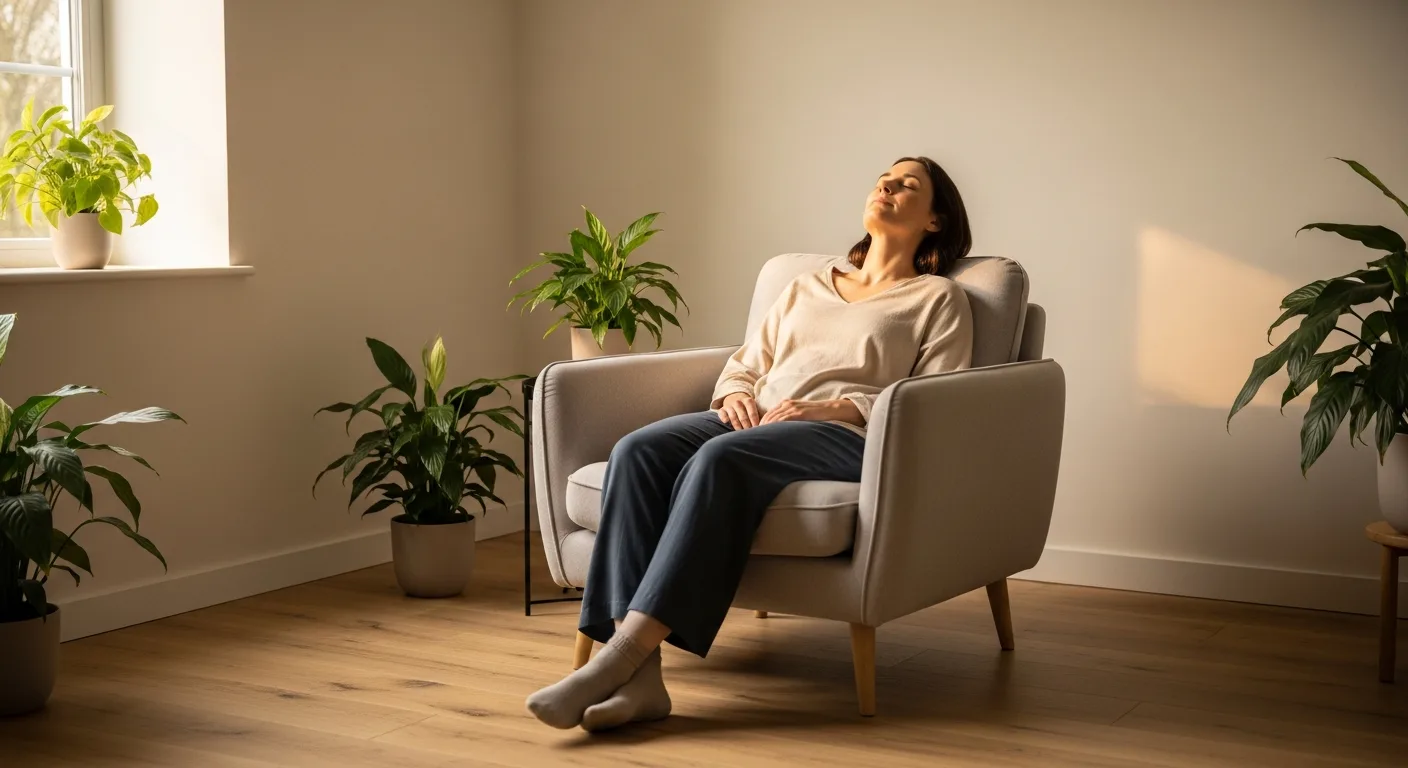
What Is Hypnotherapy?
How it all works
ExploreWritten by Darren Carter — anxiety specialist hypnotherapist.
All sessions confidential. In person in Wokingham or online UK-wide.